
You loaded the washer-dryer in your hotel room or on the guest laundry floor, pressed start, came back two hours later, and your clothes were warm, wrinkled and still damp. This is one of the most common laundry complaints from visitors to Japan, and it is usually not your fault.
Quick answer: All-in-one washer-dryers in Japan can usually dry only about half the weight they can wash, and they dry slowly at low heat. Run a smaller load, clean the lint filter, add a short extra drying cycle, or carry the wet laundry to a nearby coin laundry and finish it in a gas dryer, which usually takes 20–40 minutes and costs a few hundred yen.
- Filter: Tokyo hotels with washing machines
- Compare prices for Shinjuku, Asakusa, Ginza and more
- Free cancellation on many rooms
Why hotel washer-dryers leave clothes damp
Most hotel guest laundries and in-room machines in Japan are drum-type washer-dryer combos: the same drum washes, spins and then dries. They are convenient, but they were designed around Japanese homes, where people often hang most of their laundry and only tumble-dry part of it. Three things work against you.
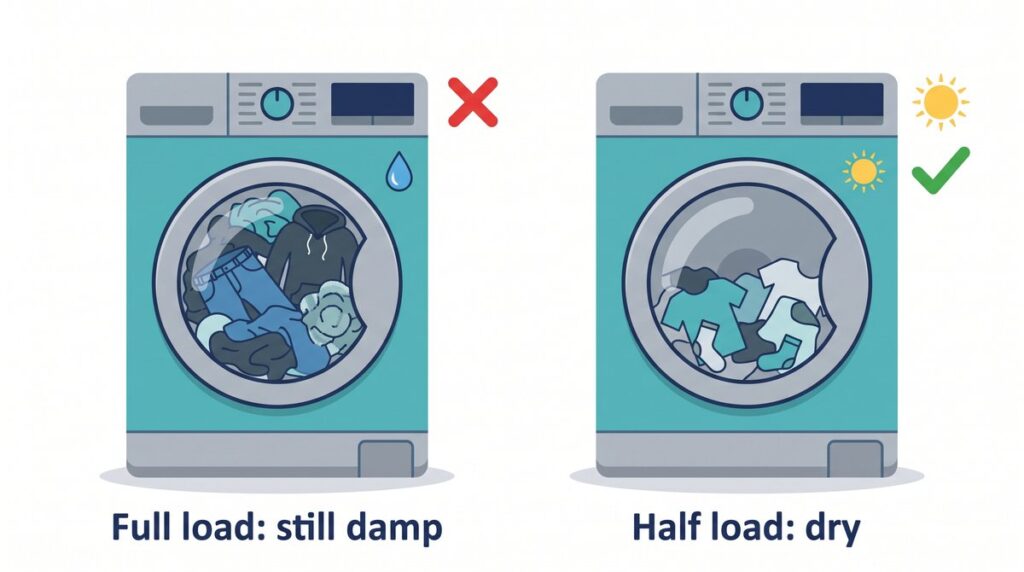
1. Drying capacity is roughly half of washing capacity
Check the sticker on the machine. A typical home drum washer-dryer is rated for something like 12 kg of washing but only 6 kg of drying. Panasonic’s current flagship model, for example, lists a 12 kg wash capacity and a 6 kg dry capacity. Compact machines used in hotel rooms are smaller still. If you fill the drum up for the wash, you have already overloaded the dry.
2. Low-temperature drying is slow by design
Many newer machines use heat-pump drying, which is gentle on fabric and saves energy but runs cooler than a typical North American vented dryer. Even under ideal test conditions, the rated wash-and-dry cycle on a full-size home model is over an hour and a half. In a hotel, where the machine is often locked to a fixed course, a “standard” wash-and-dry course of around 120 minutes is common.
3. Clothes need room to tumble
Warm air has to move through the load. Jeans, hoodies and towels packed into a small drum form a dense ball that stays wet in the middle. Mixed loads are the worst: thin T-shirts are dry long before the jeans are.
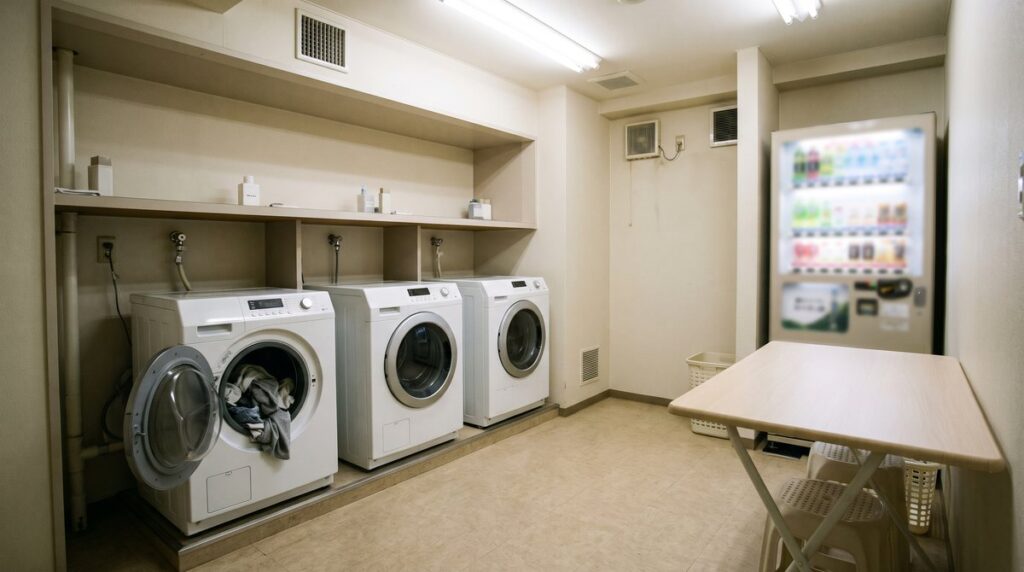
Hotel combo vs coin laundry dryer at a glance
| Hotel washer-dryer combo | Coin laundry gas dryer | |
|---|---|---|
| Typical price | Often ¥300–500 per course (≈ $2–3.50); free at a few chains | About ¥100 per 8–10 minutes (≈ $0.70) |
| Time to dry one load | 60–120 minutes or more, sometimes still damp | About 20–40 minutes for a normal load |
| Heat | Low (heat pump or small heater) | High (gas burner, large drum) |
| Best for | Small loads, light fabrics, convenience | Heavy items, full loads, when you are short on time |
| Risk | Damp, wrinkled clothes | Shrinkage of cotton or wool on high heat |
USD figures use roughly ¥150 = $1 and are for orientation only. Prices vary by property and store.
How to get dry clothes from a hotel washer-dryer
Run half a load
This is the single biggest fix. If the machine says 6 kg for washing, put in no more than about 3 kg if you want it to come out dry in one go. For one person that is roughly two or three days of clothes: a few T-shirts, underwear, socks and one pair of light trousers. Wash jeans and hoodies separately, or take them to a coin laundry.
Clean the lint filter first
Drum washer-dryers have a drying filter, usually behind a small flap near the door opening. Japanese labels say 乾燥フィルター (kansō filter, drying filter) or 糸くずフィルター (itokuzu filter, lint filter). A clogged filter slows drying noticeably. If the previous guest did not empty it, clear it with a tissue before you start.
Split the job: wash in the hotel, dry elsewhere
Many guest laundries let you choose 洗濯のみ (sentaku nomi, wash only) for less money. Run a wash-only course, then carry the damp laundry in a bag to the nearest coin laundry and use a gas dryer. Most Tokyo hotel districts have a coin laundry within a short walk; check our Shinjuku, Taito (Asakusa and Ueno) or Chuo (Ginza and Nihonbashi) listings.
Add a short drying-only cycle
If the load is almost dry, a short 乾燥のみ (kansō nomi, dry only) course is cheaper than starting over. Shake the clothes out first so they are not stuck together in a ball.
Separate heavy and light items
Take out anything that is already dry after the first cycle and only re-dry the heavy pieces. Socks and underwear finish quickly; denim, towels and hoodie cuffs are always the last to dry.
Use the bathroom dryer if your room has one
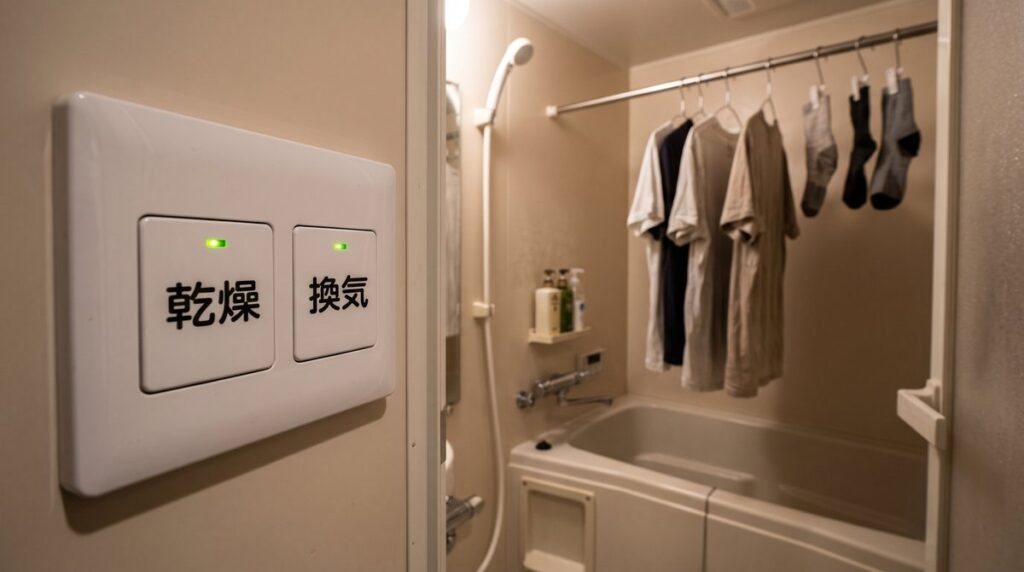
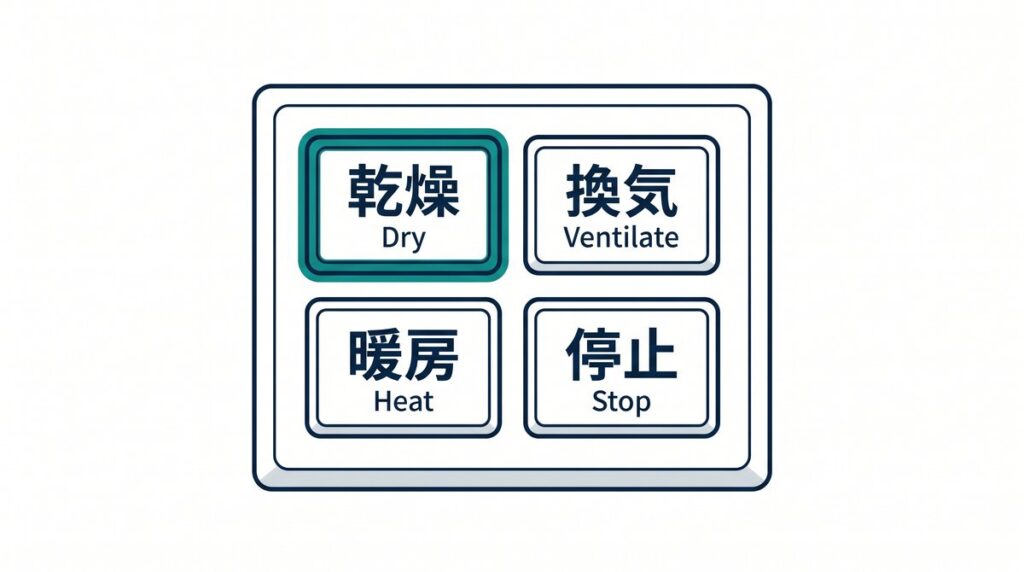
Some business hotels, serviced apartments and many Japanese apartments have a 浴室乾燥 (yokushitsu kansō, bathroom dryer) function on a control panel near the bathroom door. Hang clothes on the rail over the bath, close the door and press 乾燥. It takes several hours, so start it before bed. Other buttons you may see: 換気 (kanki, ventilation), 暖房 (danbō, heating) and 涼風 (ryōfū, cool air).
Hang things overnight
Hotel rooms in Japan are often very dry, especially in winter with the heating on. Thin synthetic travel clothes hung on hangers in the room are usually dry by morning. Do not hang wet clothes on the air conditioner, lamps or smoke detectors.
When to skip the hotel machine altogether
If you have more than three or four days of clothes, or anything heavy, it is usually faster and not much more expensive to take everything to a coin laundry. A large store machine can wash and dry a full load in about an hour, and many Tokyo stores are open 24 hours. See our Tokyo coin laundry pricing guide for typical rates and our step-by-step guide if you have never used one.
| Your situation | Best option |
|---|---|
| 2–3 days of light clothes | Hotel combo, half load, extra dry if needed |
| A week of clothes including jeans | Coin laundry (separate washer and gas dryer, or a large store washer-dryer) |
| Want to save money | Hotel wash-only course, then 20–30 minutes in a coin laundry dryer |
| Late at night, no time to wait | Hang thin items in the room or use the bathroom dryer |
| Down jacket, sleeping bag, bulky items | Coin laundry large machine (see our futon and bulky items guide) |
How long does it actually take?
| Task | Rough time |
|---|---|
| Hotel combo, wash and dry, small load | 90–120 minutes |
| Hotel combo, extra drying course | 30–60 minutes |
| Coin laundry washer (wash only) | About 25–40 minutes |
| Coin laundry gas dryer, normal load | About 20–40 minutes |
| Coin laundry large washer-dryer, full cycle | About 50–80 minutes |
| Bathroom dryer | Several hours (overnight) |
These are typical ranges, not guarantees. The control panel shows the time left as 残り時間 (nokori jikan). If the number jumps up halfway through, the machine has detected moisture and extended the dry. Our button and kanji cheat sheet covers the other labels.
Watch out for shrinkage in the other direction
Gas dryers in coin laundries run much hotter than hotel combos. Cotton T-shirts, merino and anything labelled “do not tumble dry” can shrink. If a store dryer has a temperature setting, choose 低温 (teion, low) or 中温 (chūon, medium) for clothing, and check the load after about 10 minutes. Our detergent guide covers what is and isn’t included at stores.
- Japan-only data plans from ¥390
- Buy online in English, install by QR code
- Use Google Maps to find laundromats on the go
FAQ
Q: Why are my clothes still wet after the hotel washer-dryer finished?
A: Usually because the load was larger than the machine’s drying capacity, which is typically about half of its washing capacity. Low-temperature drying and a clogged lint filter make it worse. Run half a load, or finish drying in a coin laundry gas dryer.
Q: How much laundry should I put in a hotel washer-dryer?
A: Aim for about half of the stated wash capacity if you want it dry in one cycle. For one person that is roughly two or three days of light clothes.
Q: Can I add more drying time?
A: Most guest laundry machines have a separate dry-only course (乾燥のみ) that you can run after the main cycle. It is usually cheaper than repeating the full wash-and-dry course.
Q: Is it worth walking to a coin laundry just to dry clothes?
A: Often, yes. A coin laundry gas dryer typically costs about ¥100 per 8–10 minutes and dries a normal load in 20–40 minutes, compared with an hour or more in a hotel combo.
Q: Will coin laundry dryers shrink my clothes?
A: They run hot, so cotton and wool can shrink. Use a low or medium setting if there is one, keep delicate items out, and check the load partway through.
Q: What is the bathroom dryer button in my room?
A: The 浴室乾燥 panel heats and ventilates the bathroom so you can hang laundry inside it. Press 乾燥 to start. It is slow but free, and works well overnight.
Last verified: November 2026. Prices and machine specifications vary by hotel and store; always check the label on the machine you are using. USD conversions use roughly ¥150 = $1.
Sources
- Panasonic, NA-LX129F drum washer-dryer product page (wash 12 kg / dry 6 kg): https://panasonic.jp/wash/products/NA-LX129FL.html
- Panasonic, NA-LX129CL specifications (rated wash-and-dry cycle time): https://panasonic.jp/wash/p-db/NA-LX129CL_spec.html
- laundry-navi.com Tokyo coin laundry database (dryer pricing and machine types), checked November 2026